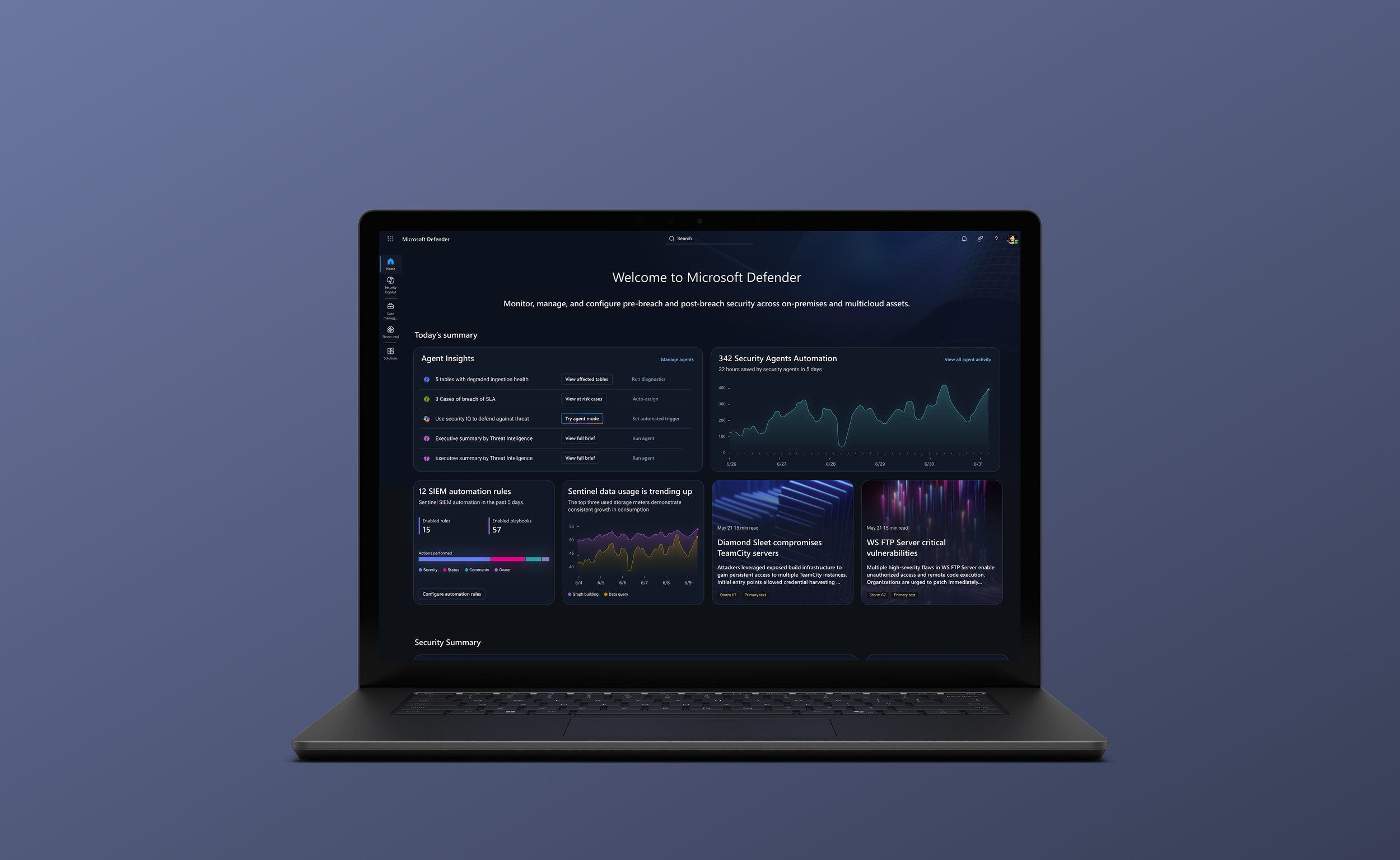
Visual Design / Art Direction / Systems Design
Modernizing Microsoft Security for the AI Era
The High-Level Challenge: Microsoft Security experiences had evolved independently, creating fragmented administrative UIs that struggled to support real-time, AI-assisted operations.
The Solution in Brief:
New Design Language: A modernized, Fluent-compatible visual theme for high-density, operational workflows.
Agentic Security: A scalable visual identity framework enabling trust and recognition across specialized AI agents.
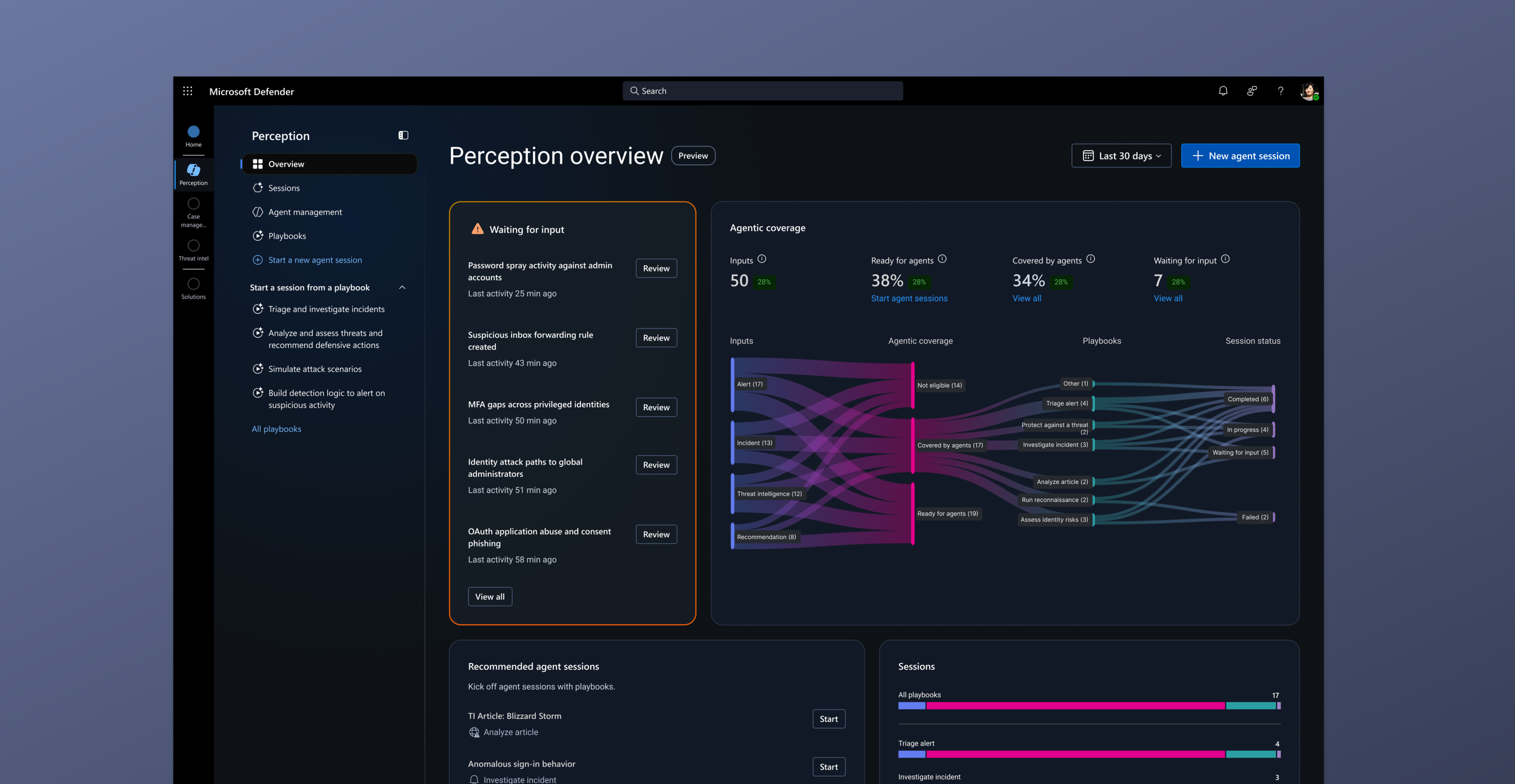
The Core Challenge:
Administrative vs. Operational: Legacy tools were built for slow configuration rather than fast, real-time threat response and AI co-piloting.
Cognitive Load & Inconsistency: Fragmented visual styles across products made critical telemetry hard to scan and parse.
The AI Shift: As autonomous and agentic workflows emerged, interfaces needed clearer hierarchy and explicit trust signals without requiring ground-up codebase rewrites.
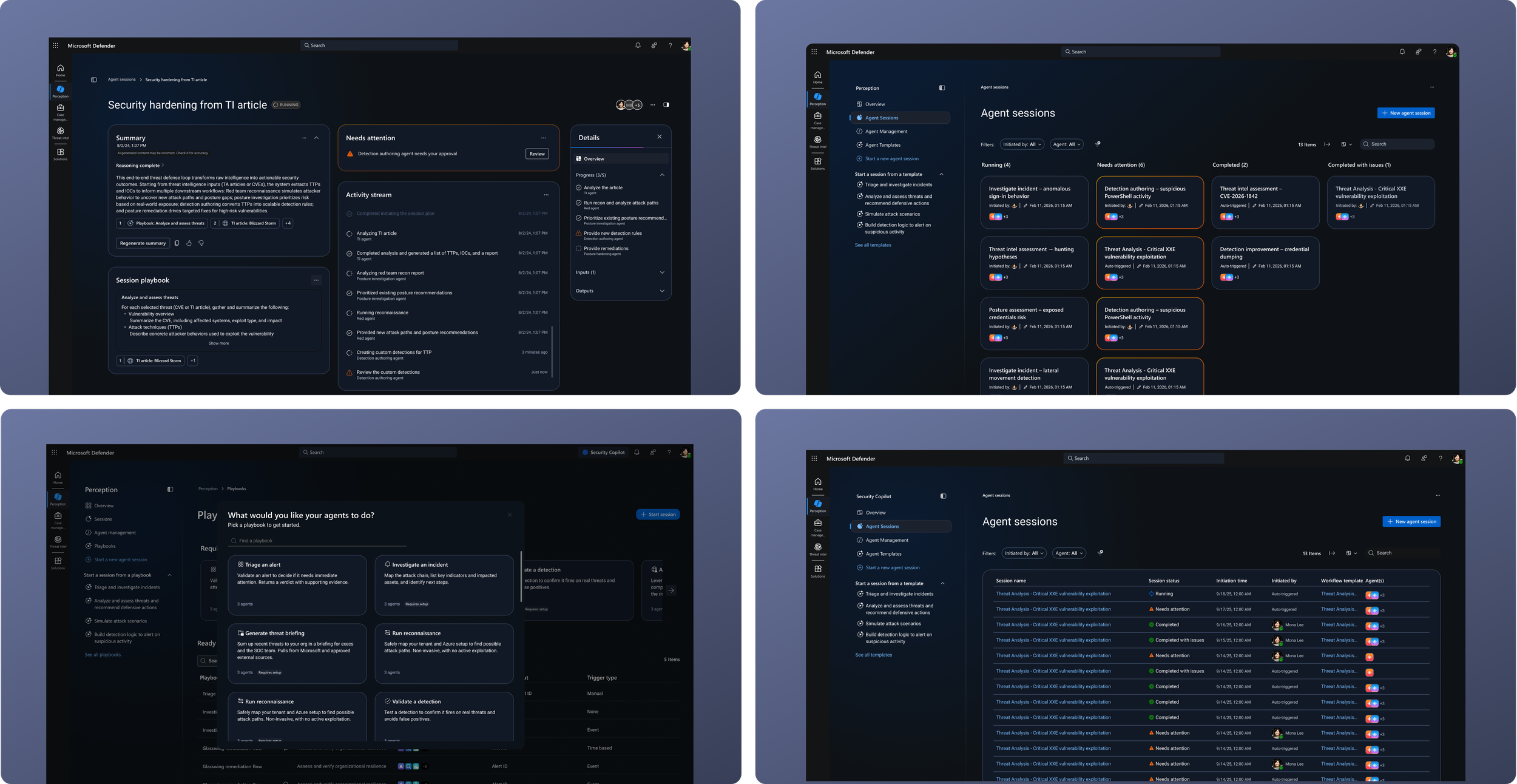
Foundational UI Modernization
The Goal
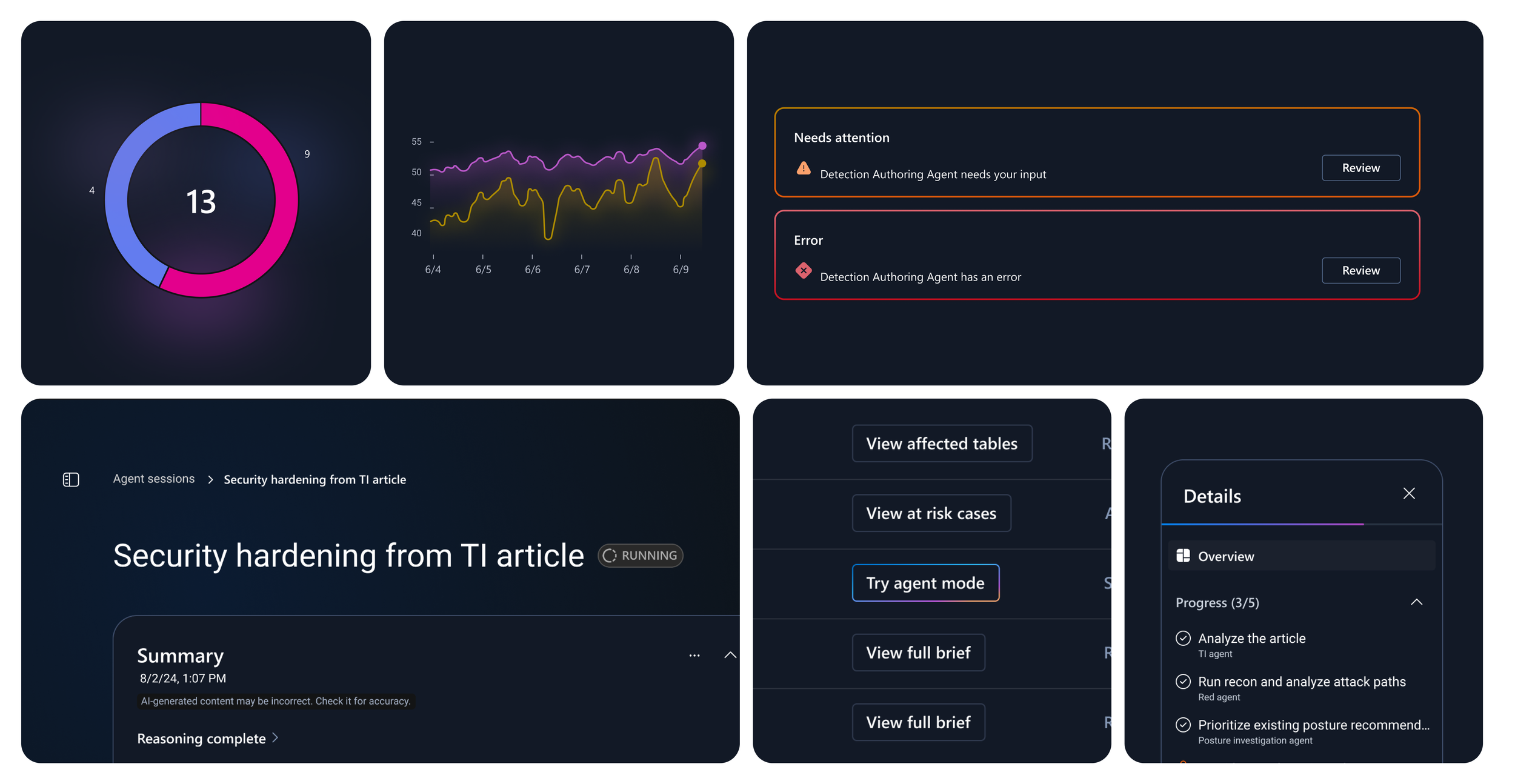
Establish a unified, modern visual language compatible with Fluent and Security Fluent Extension to transition Microsoft Security from administrative configurations to real-time operations.
What I Did
Cross-Disciplinary V-Team Collaboration: Partnered within a cross-functional virtual team alongside product designers, PMs, design systems leads, and UX engineering to iteratively shape, test, and finesse the new design language.
Visual Craft & Foundation Exploration: Explored visual directions, themes, and design patterns, contributing core expertise across color systems, typography scale, spacing, radius, and elevation.
Rapid Prototyping & Scenario Stress-Testing: Pressure-tested visual directions across complex, data-heavy product scenarios to evaluate readability, edge cases, and cognitive load in operational environments.
Data Visualization Modernization: Explored updated visual patterns for telemetry, charts, and real-time security dashboards across both light and dark operational themes.
System Alignment: Finessed foundation details to align seamlessly with existing Fluent and SFE frameworks, ensuring incremental and realistic implementation paths for engineering teams.
Scaling AI Identity
The Goal
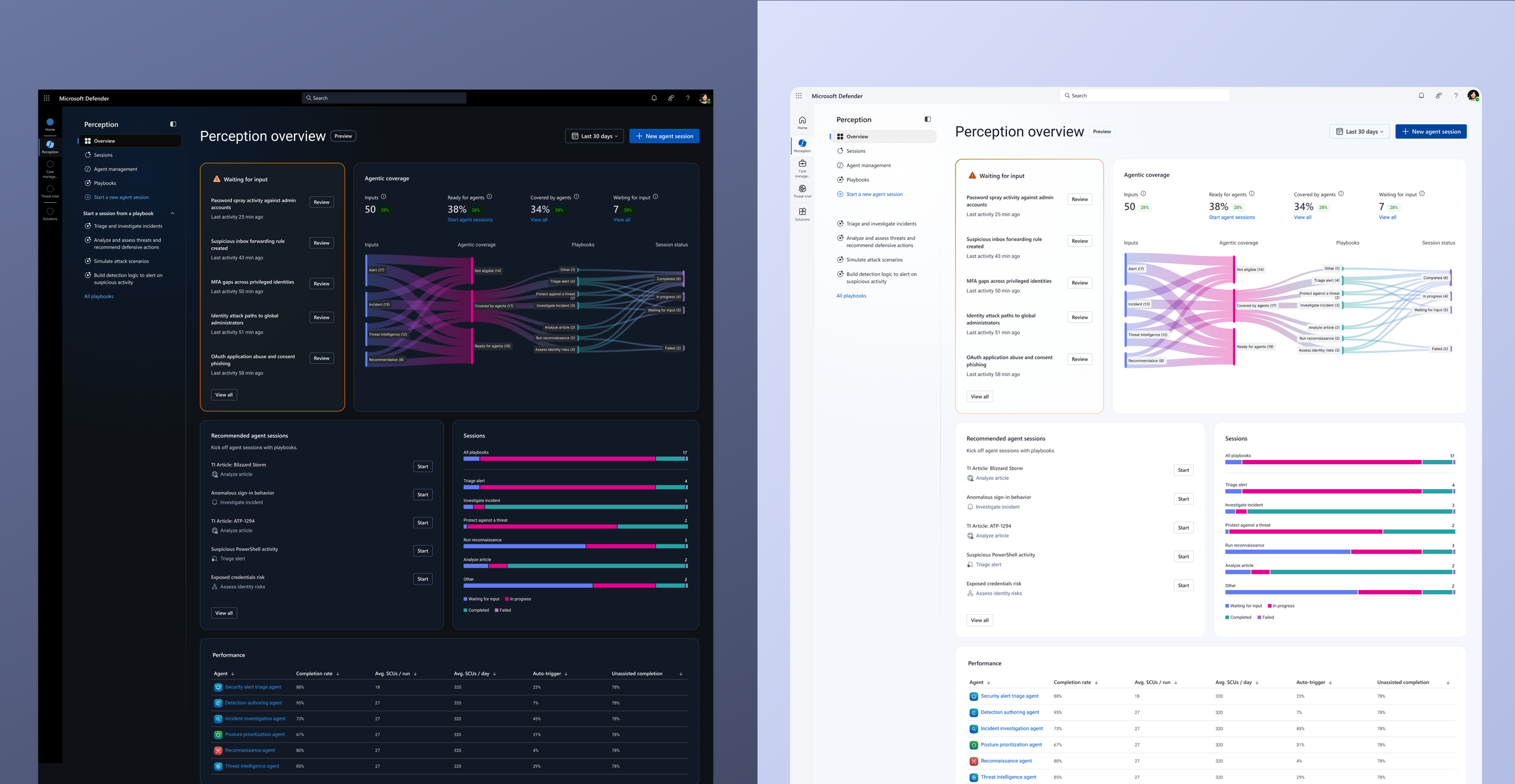
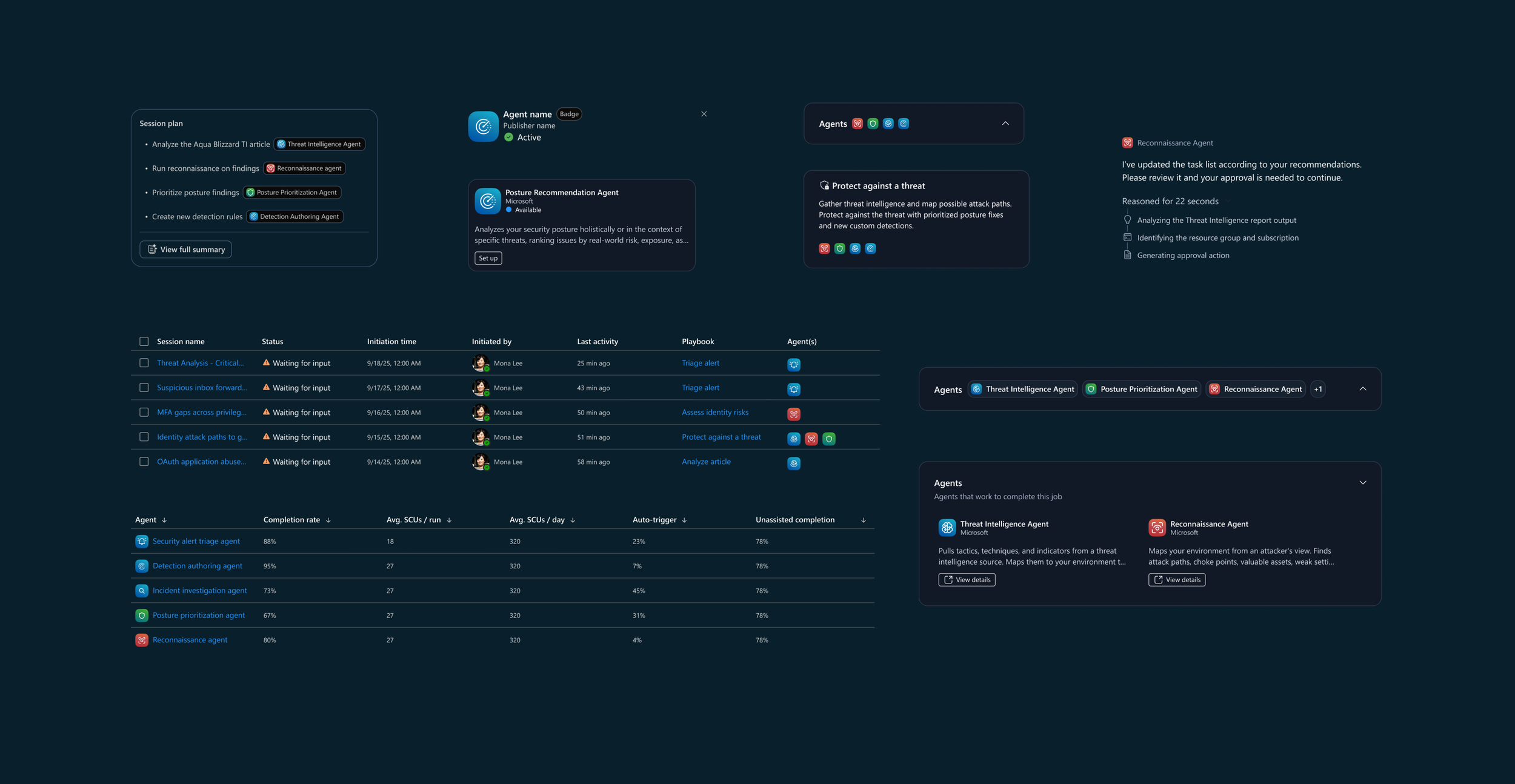
Create a visual identity framework so users immediately recognize, categorize, and trust AI agents across workflows.
The 3 Core Framework Principles:
Recognizable: Distinct avatar and silhouette language so agents stand out from standard UI components.
Categorizable: Color and icon taxonomy mapped to specific domains (threat hunting, investigation, remediation).
Consistent: Visual stability whether the agent lives in a compact table badge, a chat flyout, or a full-page orchestration playbook.
Shared Language: Delivered a unified foundation adopted across Microsoft Security without breaking existing UI frameworks.
Pilot Adoption: Pressure-tested and launched in core early experiences including Perception and Agentic Securityworkflows.
Cross-Org Alignment: Established the definitive visual taxonomy connecting UX, AI engineering, and product leadership.